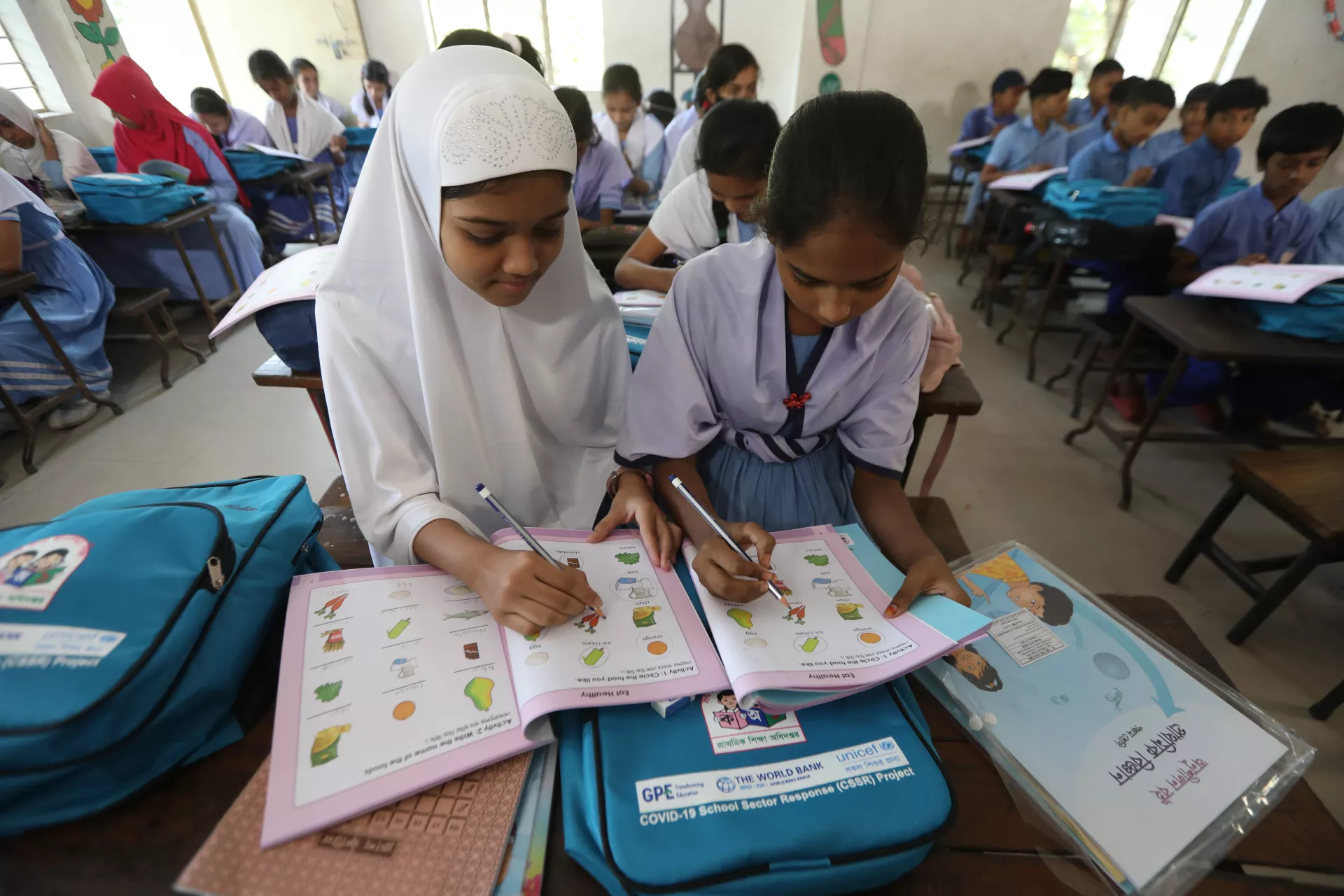
Nurani education is an Islamic teaching method that provides fundamental religious education to Muslim children. It primarily focuses on the initial stage of learning the Quran and basic Islamic principles. Nurani education teaches children Arabic letters, Tajweed (proper pronunciation), Nazira (Quranic recitation), and basic Islamic knowledge. It helps children develop proper Quranic recitation, religious ethics, and an understanding of Islamic culture. Typically, children aged 3 to 5 years participate in this educational system, which lays a strong foundation for their future learning. Nurani education is highly beneficial for children as it offers an easy and engaging way to acquire basic Islamic knowledge. To maintain children's attention, the teaching method incorporates various games and attractive techniques, enabling them to learn Quranic letters and Tajweed correctly. In this system, children learn the accurate pronunciation of each letter and proper recitation, which later aids them in Quran memorization (Hifz). Through Nurani education, children become familiar with Quranic letters and words, smoothing their path for further religious studies. It instills Islamic practices, religious values, and morality in children, guiding them toward the right path. In short, Nurani education builds a strong foundation in the lives of Muslim children, playing a crucial role in shaping their Islamic education.
In the nursery class, basic education is provided to students through play-based learning.
In the first grade, students learn Bengali, English, Mathematics, and General Knowledge.
In the second grade, class-based education and attentive teaching are provided for children.
In the third grade, Mathematics, Bengali, English, and Environmental Science are taught.
In the fourth grade, students learn mathematical concepts, English literature, and general science.
In the fifth grade, alongside the academic curriculum, students are taught social and moral values.
© 2024 | Sydmin